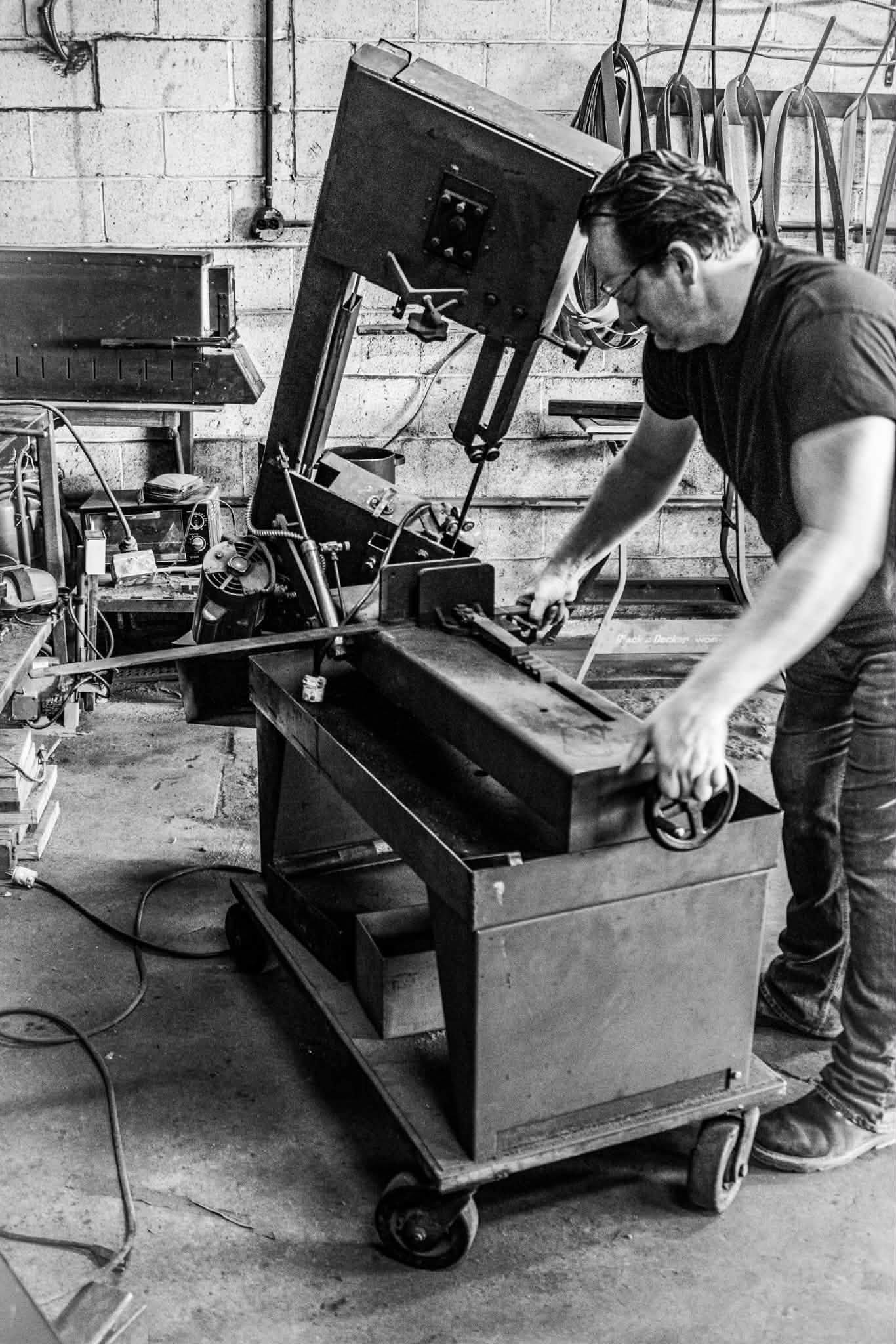
A one-person shop in Wellsville, New York. Every piece is handmade: Seth forges it himself, from raw bar stock through heat treatment to the final edge.
Forged, not cut
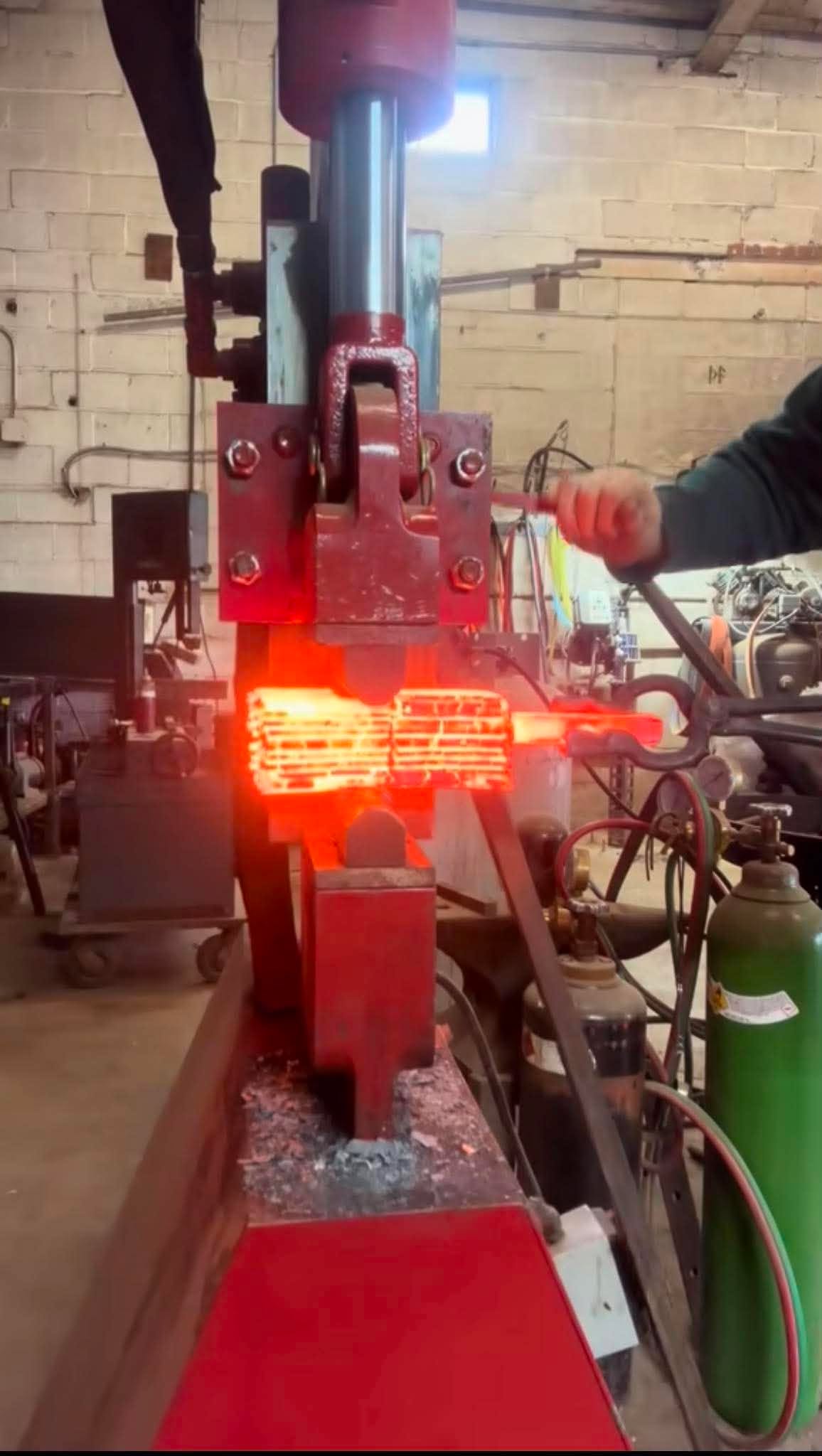
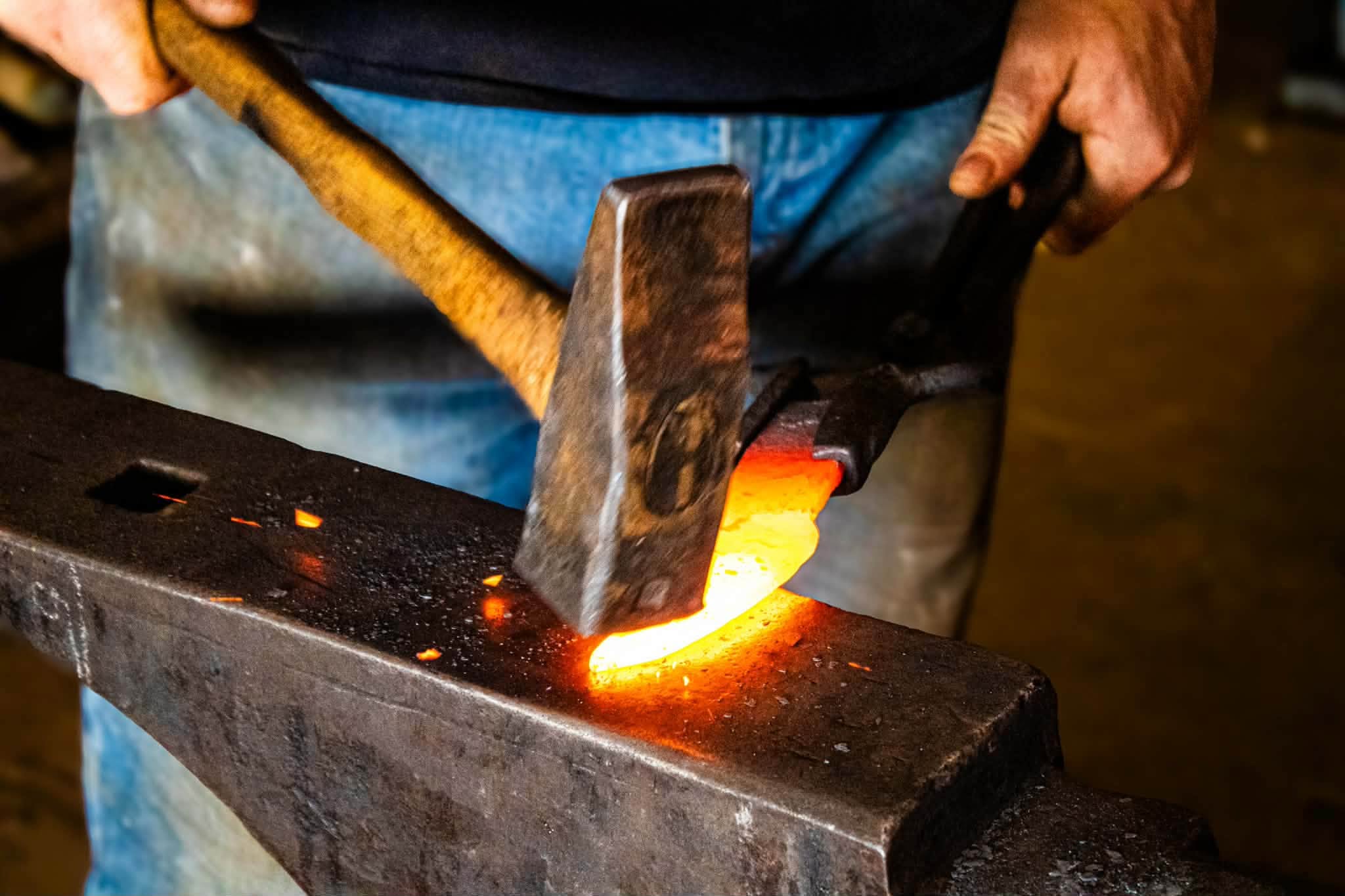
Blades are forged to shape rather than cut from flat stock. Forging moves the steel instead of removing it, so the grain runs along the spine and the edge instead of being sawn across.
It is slower, and it is the reason a knife can be taken thin without becoming fragile. It is also why no two pieces leave the shop identical.
Steel remembers how it was treated. Most of the work happens before anything looks like a knife.
Heat treatment
After forging, each blade is normalised several times to relieve the stress that shaping put into it, then hardened and tempered to a target hardness.
- Kitchen59–60 HRC. Hard enough to hold an edge through a long prep session.
- FieldAround 58 HRC. Slightly softer, trading edge retention for toughness and for the ability to bring an edge back on a stone in the field.
- NormalisingSeveral cycles before hardening, to relieve forging stress.
The steels, and why
- 1084A simple high-carbon steel used for most kitchen work. Takes a very keen edge and is forgiving to sharpen at home.
- 80CrV2Tougher, with a little chromium and vanadium. Used where impact resistance matters more than absolute sharpness.
- 1084 & 15N20The pairing used for pattern-welded work. The two etch to different tones, which is what makes the pattern visible.
None of these are stainless. Carbon steel sharpens more easily and takes a finer edge, but it will patina and it needs drying rather than leaving wet. If you want a knife you can abandon in the sink, Seth will tell you honestly that this is not it.
The person
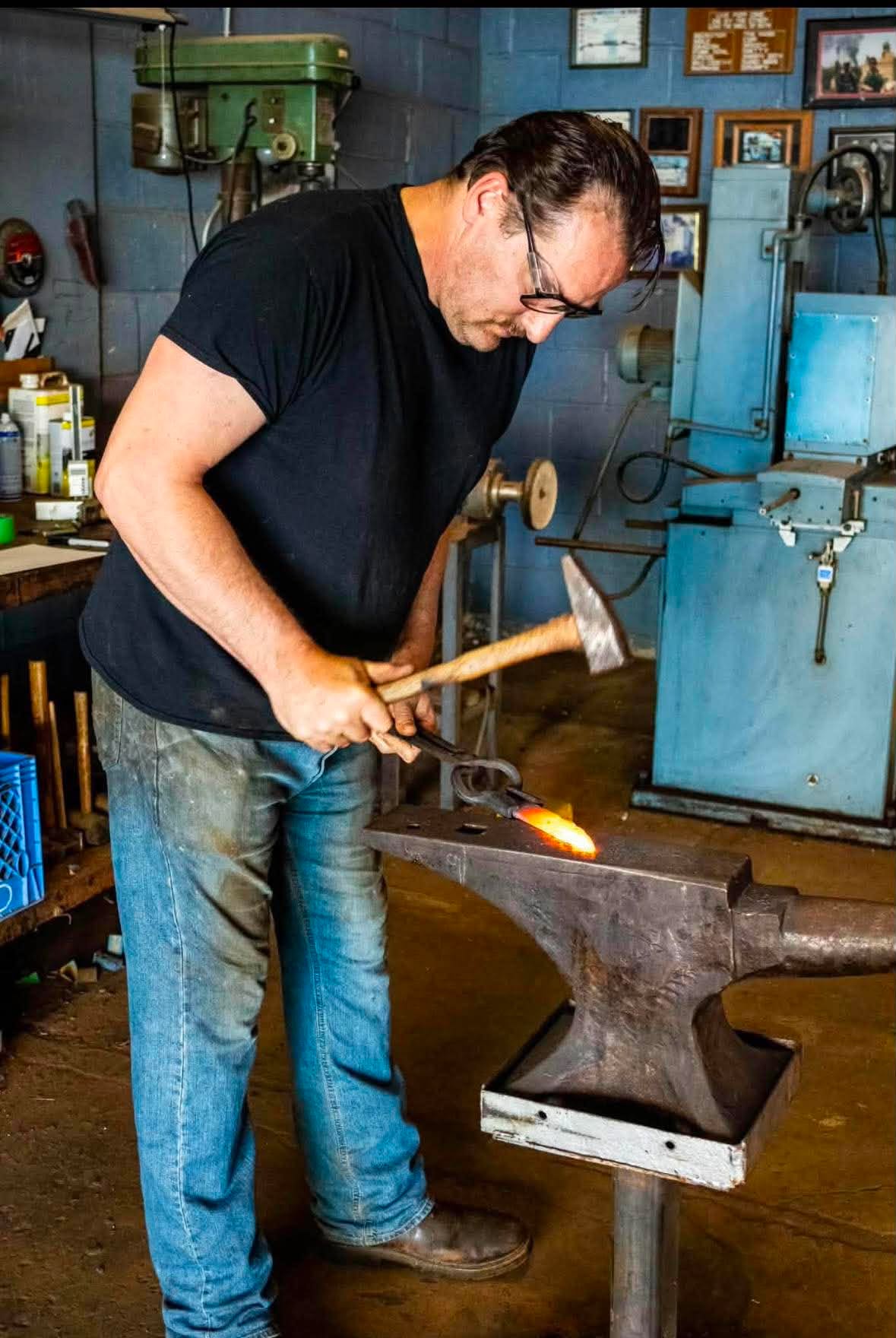
Seth is from here. He grew up in this part of western New York and still works a few miles from where he started, which is worth saying plainly: he is not going anywhere, and neither is the guarantee on anything he makes.
He is a Marine. He is also out in the community regularly—demonstrations, local events, and explaining to anyone who asks what the hammer is actually doing to the steel. If you have seen someone forging at a county event around here, there is a fair chance it was him.
Handles
Handles are shaped by hand and fitted to the individual tang. Where a piece uses stabilised wood, the blank has been resin-impregnated under vacuum so it will not move with humidity. Antler is used as it comes, which means each one is shaped to its own crown.
Visiting
The shop is a working forge, not a showroom, but visitors are welcome by arrangement. Get in touch first so Seth is not in the middle of a heat when you arrive.